We use cookies to optimize our website for you and to be able to continuously improve it. By continuing to browse the site you are agreeing to our use of cookies.
Disagree
136.319 machines d'occasion
revendeur
agréé
agréé
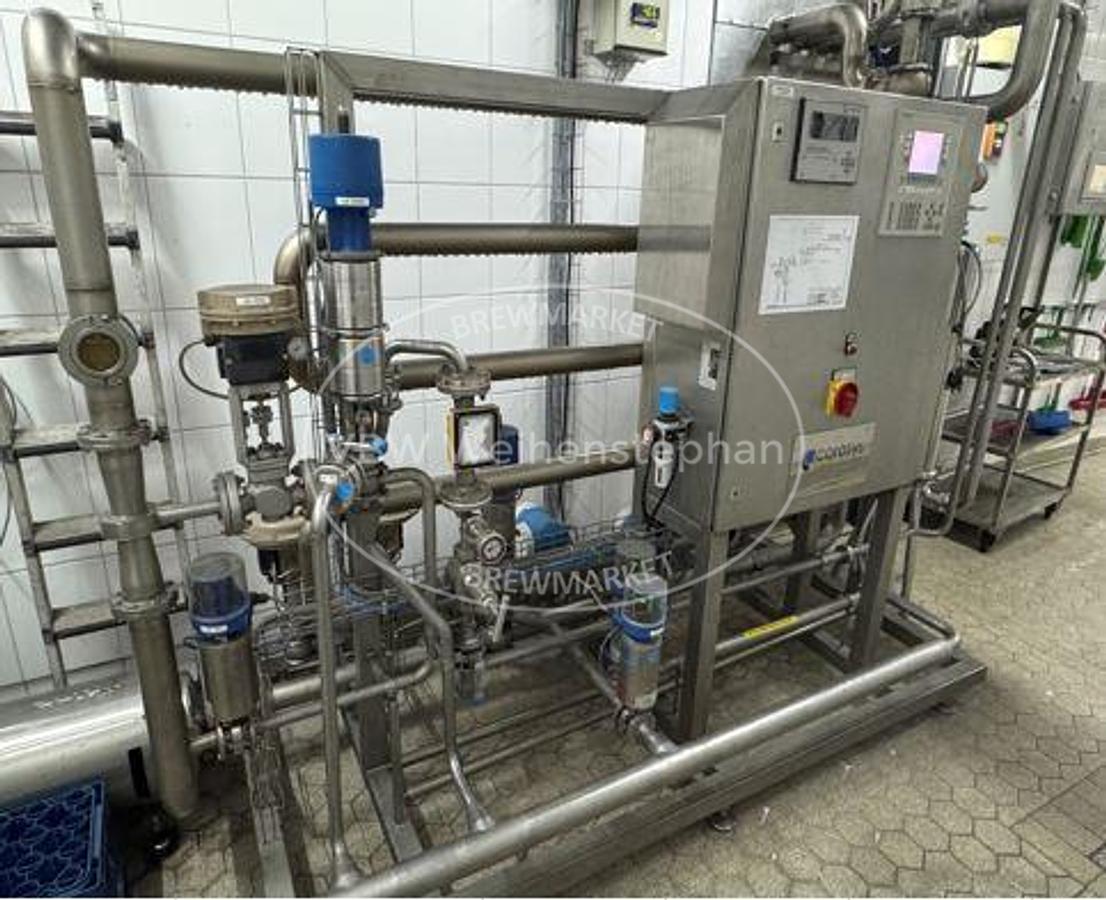
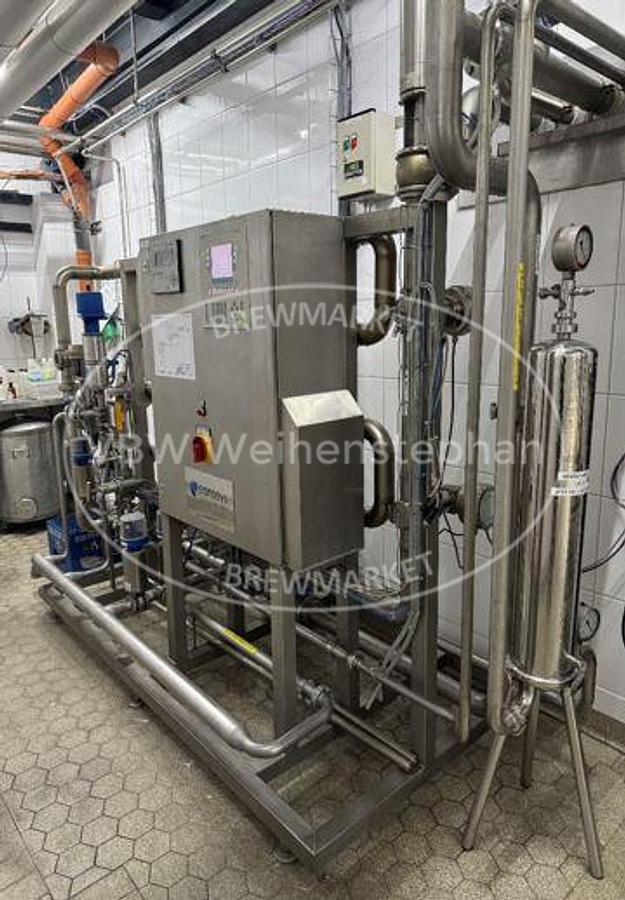
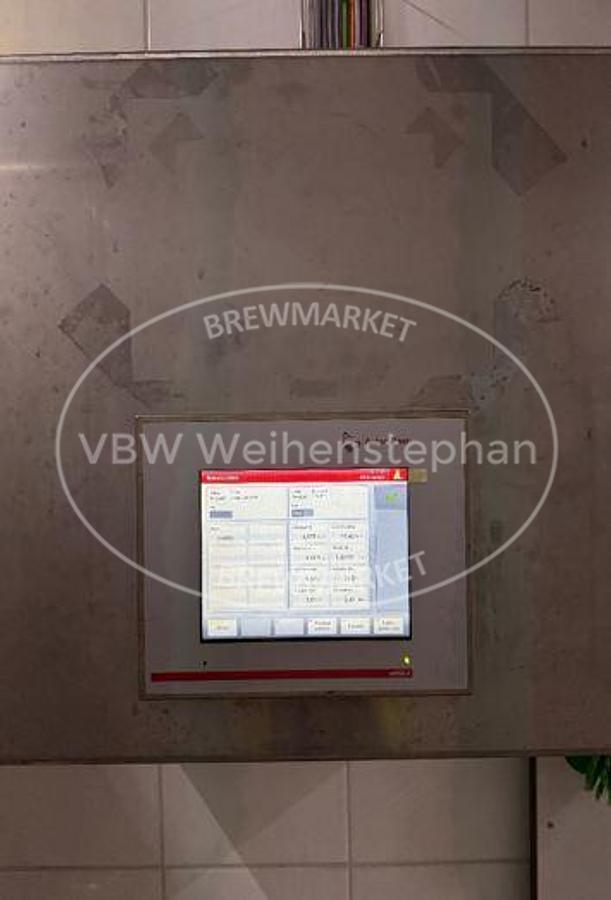
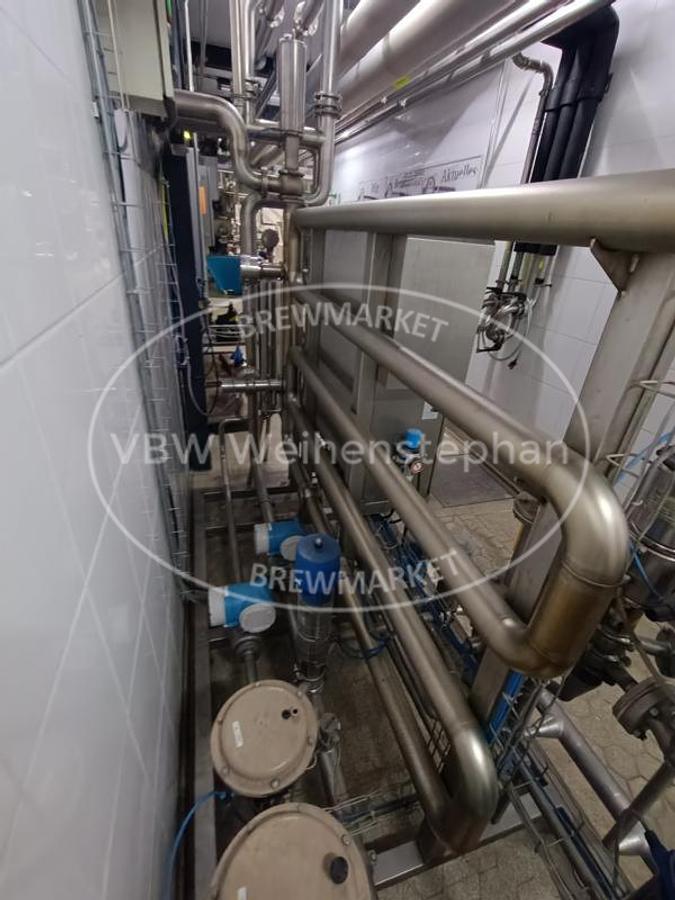

System for blending beer with degassed water and subsequent carbonation. The system is equipped with a product pump (Hilge), inductive-magnetic flow meters (E+H), control valves for blending (GEA) and CO2 dosing (Samson), a 4-way valve (GEA), and inline beer analysis technology (Anton Paar)., Additional title: Carboblender for precise mixing and carbonation, Capacity: 20000 l/h, Length: 3,40 m, Width: 1,20 m, Height: 2,50 m, Material: contact surfaces from stainless steel, Position: mounted on stainless steel frame, Features: Centrifugal pump; inline beer analyzer (Anton Paar); density measurement (Anton Paar); 2 x flow meters; 3 x control valves (for blending and CO2 dosing); 4-way valve; various piping; control cabinet with touch panel
revendeur
agréé
agréé
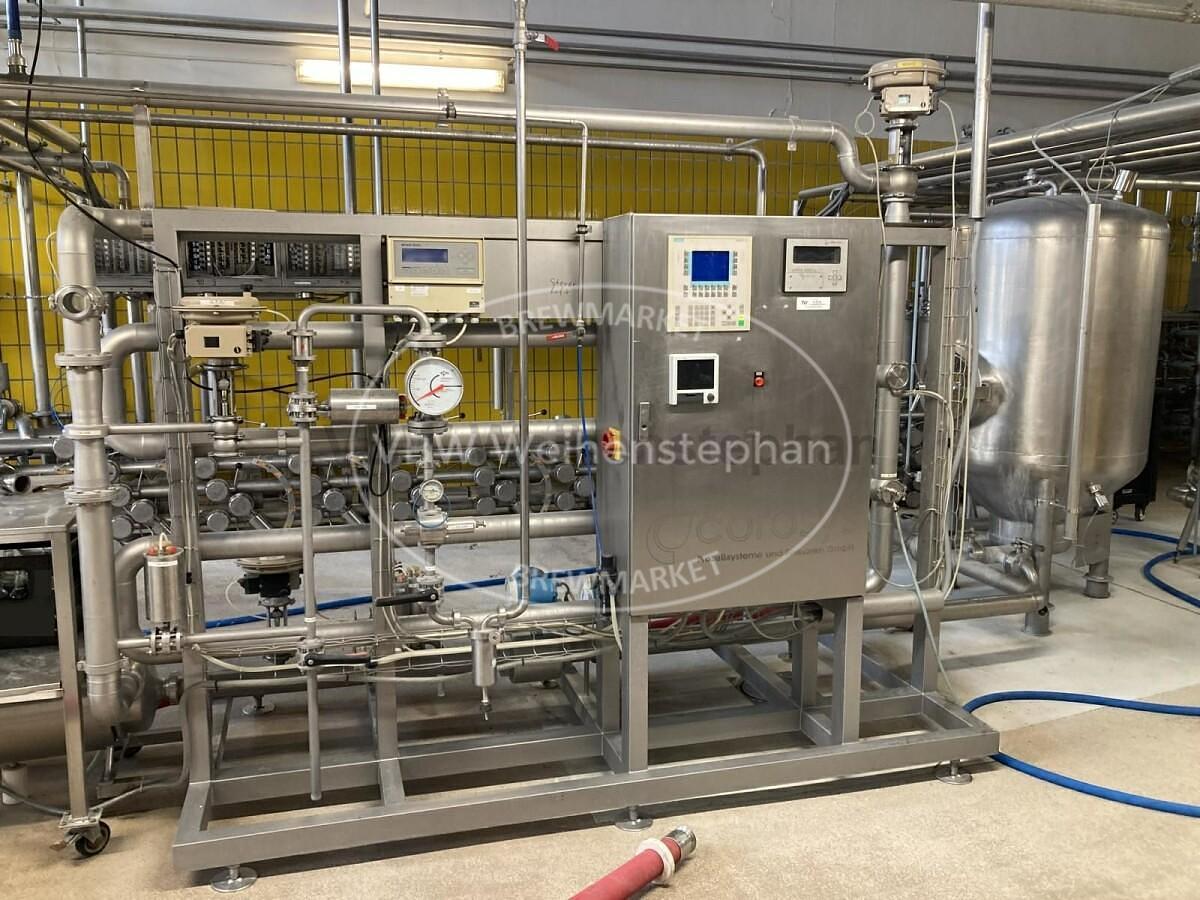
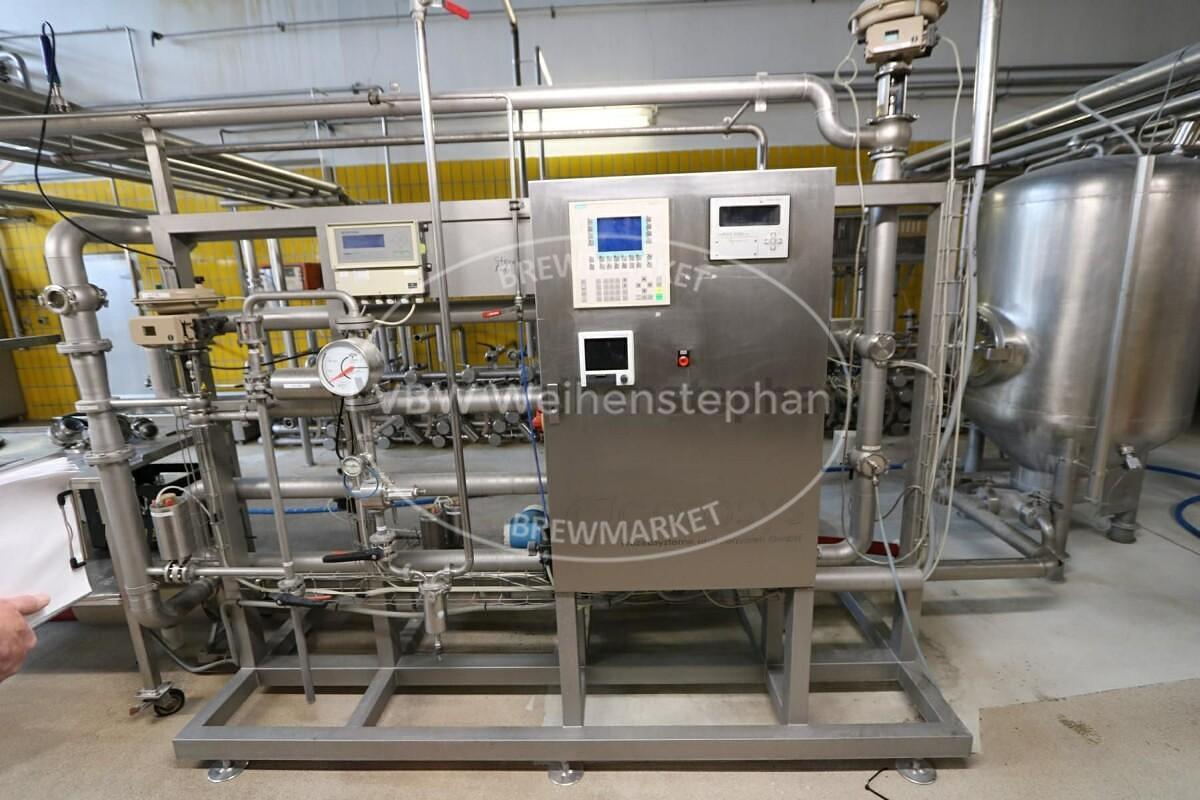
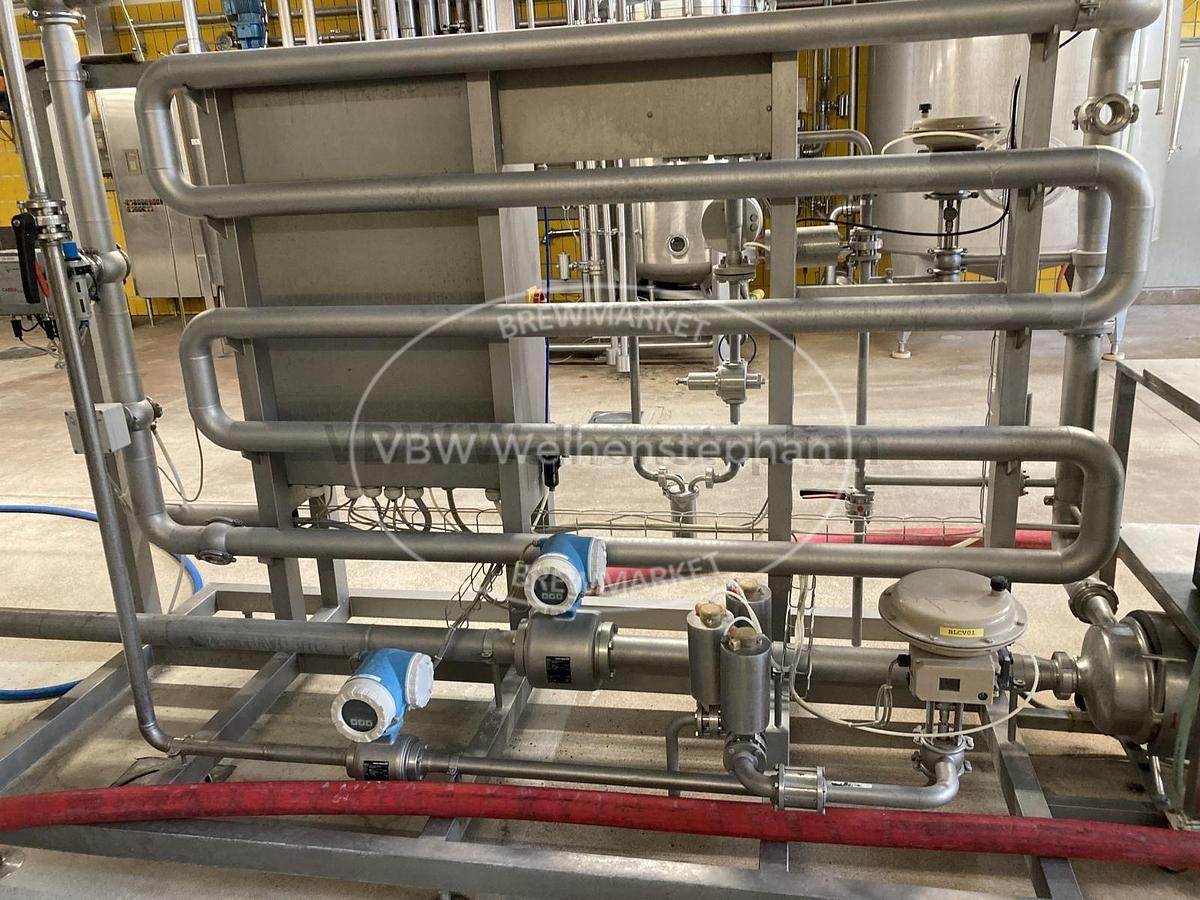
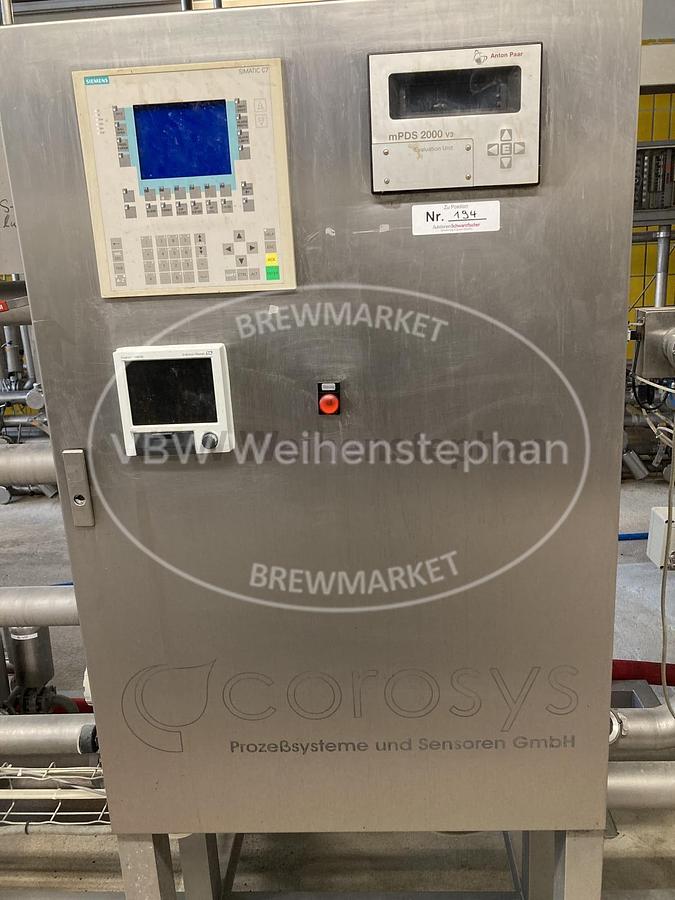
The fully-automated carbonisation plant produces the CO2-amount of beer, beer mixing beverages, soft drinks, mineral water and wine in a continuous and high-precision way by precise controlled dosing of CO2., Capacity beer feed: 20000 l/h, Capacity degassed water: 10000 l/h, Capacity blended beer: 30000 l/h , CO2-supply: 8 barg, Power: 23 kW, Current: 50 A, Voltage: 400 V, Frequency: 50 Hz, Compressed air: 6 bar, Length: 2790 mm, Width: 1250 mm, Height: 2440 mm, Weight: 500 kg, Operation / Control: fully automatic, electrical cabinet with control panel, Material: stainless steel, Features: Flange connection: Beer: DN80, degassed water: DN40, CO2: DN25, blended beer: DN65 Beer pump; carbonisation section; flow measurement; Anton Paar original wort, alcohol and CO2 measurement; pressure gauge; sampling taps; various other valves
revendeur
agréé
agréé



Le Corosys CCS DN50 est une usine de carbonatation et de procédé utilisée dans les usines de fabrication de boissons. Il injecte du CO₂ dans les jus de fruits, la limonade et d’autres boissons gazeuses de manière contrôlée et assure le degré de carbonatation souhaité. De plus, le CIP (nettoyage), la vapeur et les connexions de refroidissement permettent des processus intégrés de production hygiénique et de stérilisation, permettant à la chaîne de production de fonctionner à la fois efficacement et de manière hygiénique.
Vous ne trouvez pas votre machine utile?
envoyer demande
à tous les concessionnaires (aucune inscription nécessaire)